Heat Waves Are Getting Worse — And Your AC Knows It
The National Weather Service has issued more excessive heat warnings for Riverside County in the last five years than in the previous fifteen combined. When outdoor temperatures push past 110°F, air conditioners work at the very edge of their design limits. A system that runs "just fine" at 95°F can fail spectacularly at 112°F. The NWS heat safety guide lists air conditioning access as the single most important factor in preventing heat-related illness — so prep matters.
Start With a Full Pre-Season Tune-Up
Most heat-wave AC failures trace back to problems that were detectable weeks earlier: weak capacitors, low refrigerant, dirty coils, or a fan motor pulling too many amps. A comprehensive HVAC maintenance visit catches all of them before the mercury climbs.
Check the Age of Your Capacitor
Run capacitors are the #1 heat-wave failure point. They cost about $20 in parts but cause 100% of your cooling to stop when they blow. If your capacitor is over five years old — and especially if it's the original from a 10+ year old system — replace it proactively. It's cheap insurance.
Clean the Outdoor Condenser Coil
A layer of dust, pollen, and cottonwood fluff on your outdoor coil can raise refrigerant pressures dangerously high on a 110°F day. This is the leading cause of compressor trips during extreme heat. A garden hose (never a pressure washer) run gently top-down clears most of it — but a professional cleaning goes deeper.
Verify Refrigerant Charge
An undercharged system doesn't just cool less — it works harder, runs hotter, and dies faster. On the flip side, an overcharged system can flood the compressor. Only a licensed technician with gauges can properly verify charge. If a technician says "let me top it off" without finding a leak first, get a second opinion. Our AC repair team always locates and repairs leaks before recharging.
Pre-Cool Before Peak Heat
On a forecasted 110°F day, drop your thermostat to 72°F between 6 a.m. and 10 a.m. while outdoor temps are still manageable. Then raise it to 78°F for the afternoon. Your system will coast on the cool mass of the house rather than fighting a losing battle at 4 p.m.
Know When to Call for Help
If your indoor temperature keeps climbing despite the AC running, your outdoor unit is icing up, or you hear unusual clicking, buzzing, or grinding — shut the system off and call. Continuing to run a struggling AC in extreme heat is how a $300 repair becomes a $6,000 replacement. We serve Riverside, Moreno Valley, and Temecula with same-day emergency dispatch.
If Your System Is 12+ Years Old, Plan the Replacement Now
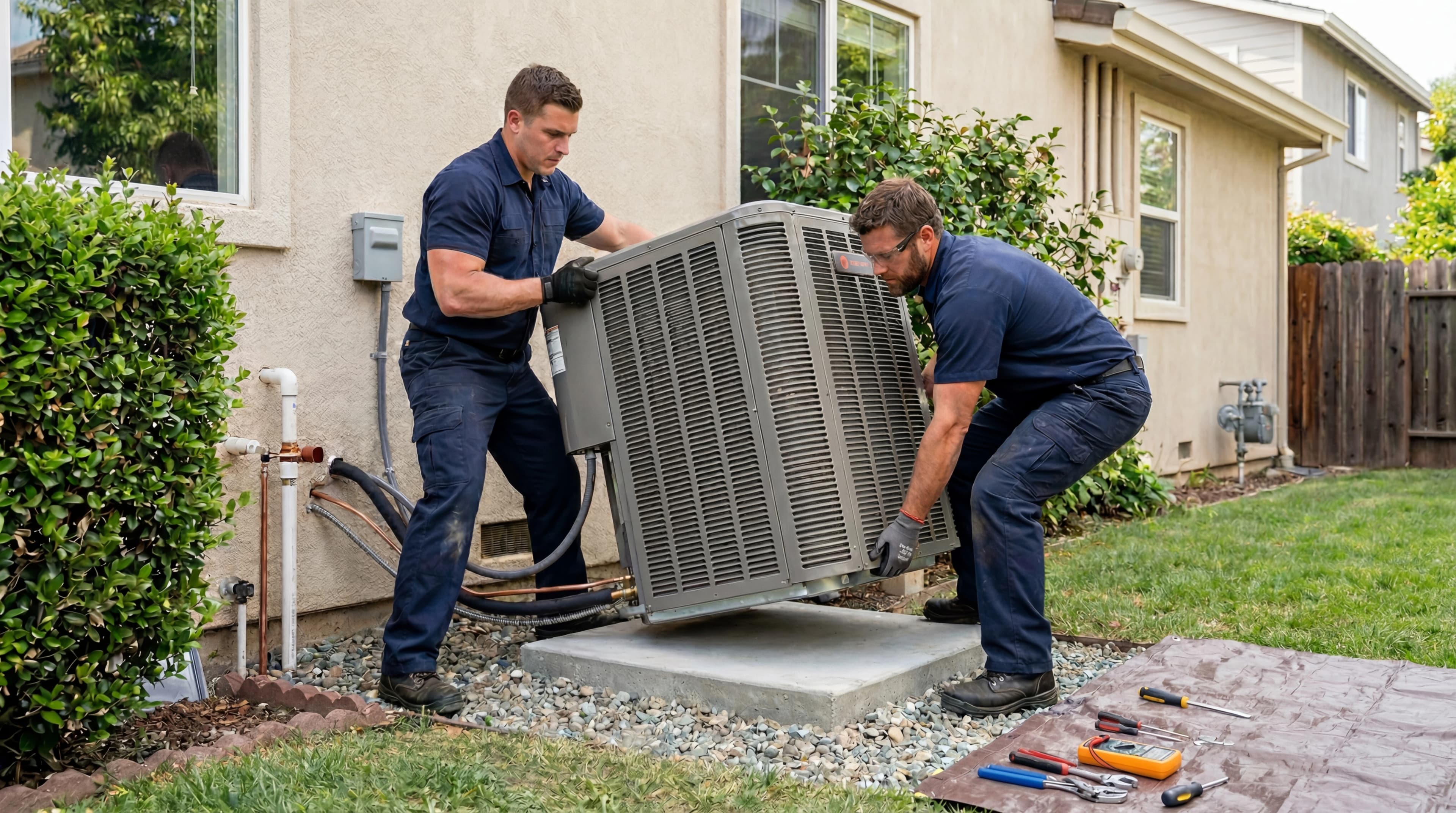
Modern high-efficiency systems handle extreme heat dramatically better than the units engineered a decade ago. If yours is on borrowed time, replacing it in the spring beats replacing it during a heat emergency when supply is thin and prices spike. See our AC installation options or request a free assessment.
Beat the Heat With a Plan
Every summer, we field emergency calls that could have been prevented in April. Don't be that call. Book a pre-heat-wave tune-up or claim our current seasonal offer today.
About the Author
Justin Jaszewski
Co-Founder & NATE-Certified Technician
Justin is the co-founder of It's No Sweat Heat & Air and a NATE-certified HVAC technician with over 25 years of hands-on experience across Moreno Valley and the Inland Empire. He leads the company's technical standards, trains every technician on the team, and personally inspects complex installations. Justin holds California HVAC license #1058772 and specializes in residential system design, load calculations, and energy-efficiency upgrades.