
The Short Answer: Yes — But With Caveats
For most homeowners in Perris and Menifee, a properly configured smart thermostat saves between 8% and 15% on annual heating and cooling costs. That's real money in a region where summer AC bills routinely exceed $300 a month. But the savings are highly dependent on getting the installation, configuration, and system compatibility right.
Why Smart Thermostats Actually Save Money
The savings don't come from magic — they come from removing human error. Most homeowners forget to raise the setpoint when they leave for work, don't cut back at night, and set unrealistic temperature targets. A smart thermostat learns your schedule, uses geofencing to know when the house is empty, and often integrates with your utility's peak-hour signals to avoid the most expensive kilowatt-hours. ENERGY STAR certified smart thermostats are independently verified to deliver measurable savings.
Compatibility: Not Every System Plays Nice
Smart thermostats need a "C-wire" (common wire) to power themselves. Many older Inland Empire homes — especially those built in the 1980s and early 1990s — don't have one. Adapters exist, but they're finicky. Multi-stage or variable-speed systems also require specific thermostat models to unlock their full efficiency. Our technicians verify compatibility during any HVAC maintenance visit.
Which Model to Buy
The three that consistently perform well in the Inland Empire climate:
- Ecobee Premium — best-in-class remote sensors solve the "hot bedroom" problem that plagues two-story stucco homes.
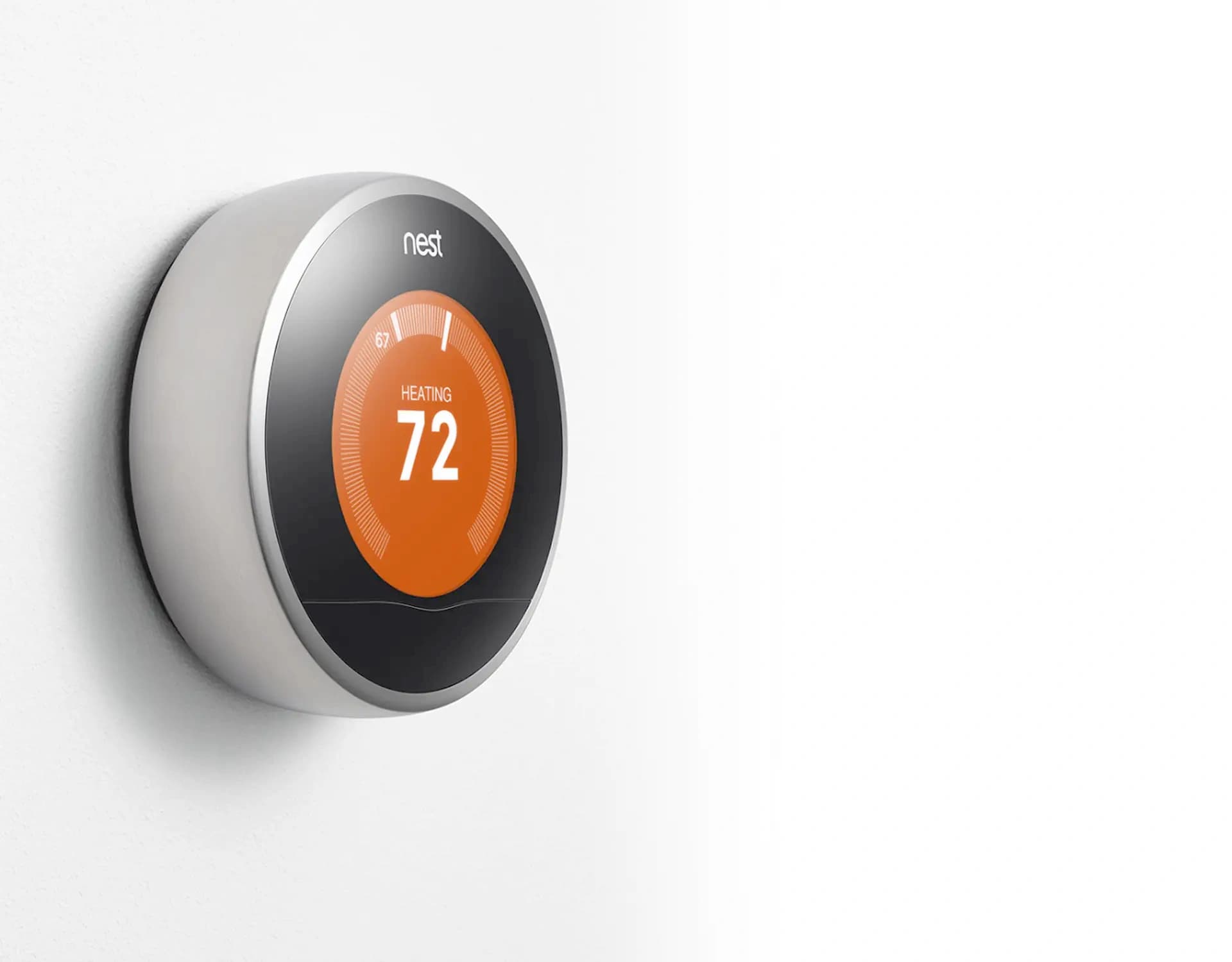
- Google Nest Learning Thermostat — easiest interface, best geofencing, but less flexibility for advanced HVAC configurations.
- Honeywell T9 or T10 Pro — pro-installer favorite for reliability and compatibility with older systems.
Skip the $79 no-name Amazon models. They fail early, lose Wi-Fi connection often, and rarely deliver the promised savings.
The "Set It and Forget It" Trap
A smart thermostat still needs a proper schedule to save money. If you set it to 72°F and never change it, you'll pay the same as an old dial thermostat. Take 20 minutes to configure home/away schedules, sleep setbacks, and eco temperatures — that's where the savings actually live.
SCE Rebates in Riverside County
Southern California Edison periodically offers rebates of $50–$120 on qualifying smart thermostats. These programs come and go — check current offers before purchasing. Some models also qualify for federal tax credits under the Inflation Reduction Act's home energy incentives.
Should You Install It Yourself?
If you have a standard single-stage system with a C-wire and comfortable DIY skills, self-installation is realistic. If you have a heat pump, a two-stage system, no C-wire, or you're not 100% sure what the wires do — hire it out. A miswired thermostat can damage the control board and turn a $200 upgrade into a $1,500 repair. When we swap a thermostat during an AC repair visit, it takes 30 minutes and comes with a warranty.
The Bottom Line
For a Perris or Menifee homeowner with a system less than 15 years old and typical summer usage, a quality smart thermostat pays for itself in 12–18 months and continues delivering savings for a decade. Request a compatibility check or call (951) 331-3310 — we'll tell you honestly whether an upgrade makes sense for your specific setup.
About the Author
Justin Jaszewski
Co-Founder & NATE-Certified Technician
Justin is the co-founder of It's No Sweat Heat & Air and a NATE-certified HVAC technician with over 25 years of hands-on experience across Moreno Valley and the Inland Empire. He leads the company's technical standards, trains every technician on the team, and personally inspects complex installations. Justin holds California HVAC license #1058772 and specializes in residential system design, load calculations, and energy-efficiency upgrades.