The Silent Season Begins in November
Every fall, when Inland Empire homeowners fire up furnaces that sat dormant since March, carbon monoxide incidents spike. According to the CDC, over 400 Americans die from unintentional CO poisoning each year, and more than 100,000 visit emergency rooms. Nearly all of it is preventable. The CDC's carbon monoxide prevention guidelines make clear that furnace inspections and functioning CO alarms are the two highest-impact safeguards.
Check 1: Test Every Carbon Monoxide Alarm in Your Home
Press and hold the test button on every alarm. If it doesn't beep loudly within a few seconds, replace it — not just the battery. CO alarms have an internal sensor lifespan of 5–10 years. Look at the manufacture date on the back. If it's over 7 years old, replace the unit even if it still tests.
Check 2: Verify You Have Enough Alarms — In the Right Places
California code requires a CO alarm on every level of the home and near every sleeping area. In practice, that usually means at least 3 alarms in a typical Inland Empire single-family home. If your bedrooms are far from an alarm, add one.
Check 3: Inspect the Furnace Flue and Vent Pipe
Before firing up the system, visually inspect the flue pipe running from the furnace to the roof or wall. Look for corrosion, disconnection, or physical damage. Rodents and birds sometimes nest in vents — a blocked flue is one of the most common CO poisoning causes. If you're unsure, our furnace service technicians inspect this on every visit.
Check 4: Look at the Burner Flame Color
When your furnace is running, remove the front panel and observe the burner flame. It should be a steady, mostly blue flame. Yellow, orange, flickering, or lifting flames signal incomplete combustion — the exact condition that produces excess CO. Shut the system off and call for service.
Check 5: Check for Soot Around the Furnace Cabinet
Black soot deposits on or near the furnace, especially around the burner compartment or the flue collar, indicate combustion problems. Any soot warrants immediate professional inspection.
Check 6: Have the Heat Exchanger Inspected
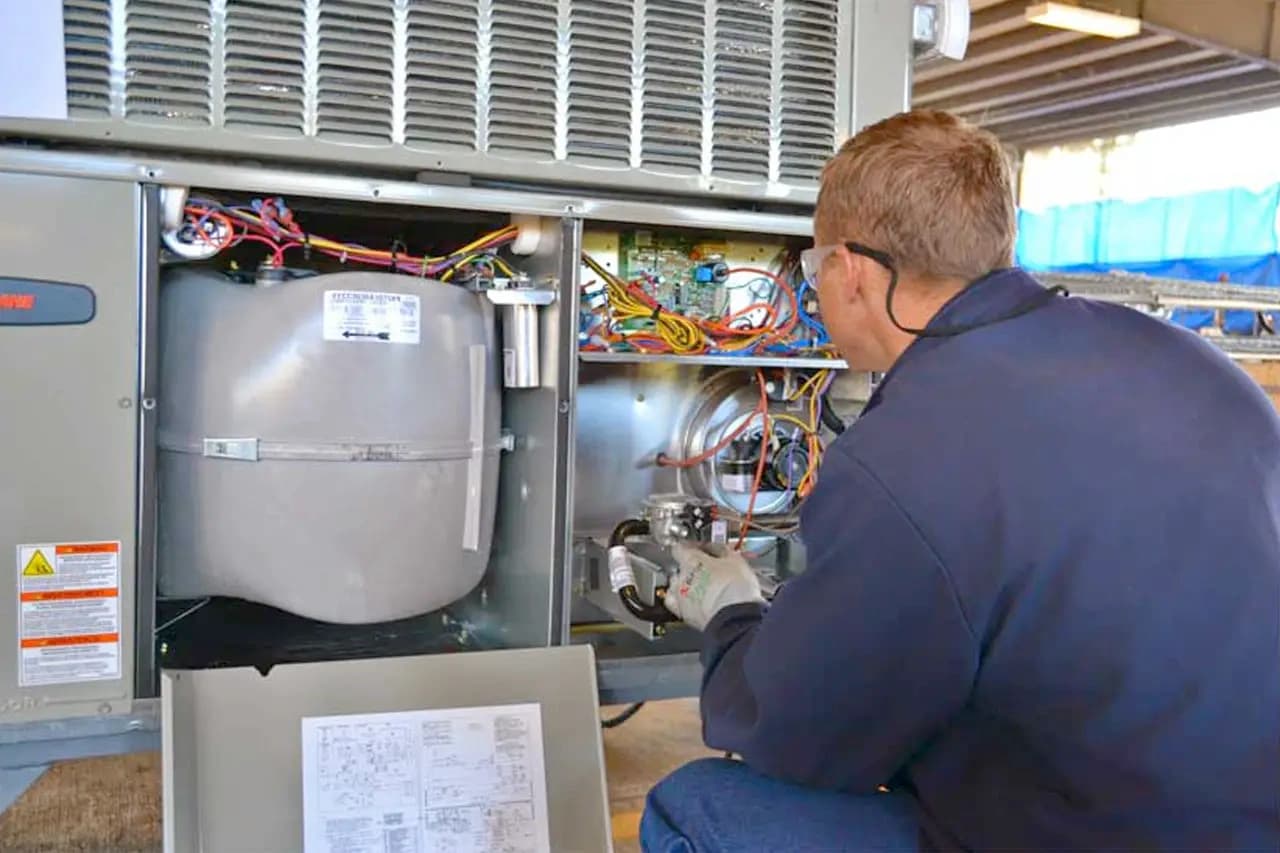
A cracked heat exchanger allows combustion gases — including CO — to leak into the air your family breathes. Cracks are impossible to detect without proper tools and access to the interior of the furnace. This is the single most important reason to have annual professional HVAC maintenance. Every one of our fall tune-ups includes a full heat exchanger inspection.
Check 7: Ensure Adequate Combustion Air
Furnaces need oxygen to burn safely. If yours is in a closet, small utility room, or garage with modifications that limit airflow, it can starve for oxygen and produce CO. Storing paint, gasoline, or cleaning products near the furnace is also dangerous — combustion can vaporize chemicals into your air stream. Combined with poor indoor air quality, this creates a compounding health risk.
Warning Signs of CO Exposure
CO is odorless and colorless, so alarms are your only reliable early warning. Symptoms of exposure include headache, dizziness, nausea, weakness, confusion, and blurred vision. If multiple family members feel sick when at home and better when away, suspect CO. Leave immediately and call 911.
Book Your Fall Furnace Safety Inspection
We recommend all Inland Empire homeowners schedule a professional furnace safety inspection every fall before the first serious cold snap. Our comprehensive tune-up includes combustion analysis, heat exchanger inspection, gas pressure verification, and safety control testing — all documented in a written report. Book your inspection today or claim our current fall furnace safety offer.
About the Author
Justin Jaszewski
Co-Founder & NATE-Certified Technician
Justin is the co-founder of It's No Sweat Heat & Air and a NATE-certified HVAC technician with over 25 years of hands-on experience across Moreno Valley and the Inland Empire. He leads the company's technical standards, trains every technician on the team, and personally inspects complex installations. Justin holds California HVAC license #1058772 and specializes in residential system design, load calculations, and energy-efficiency upgrades.